Digital Patient Podcast

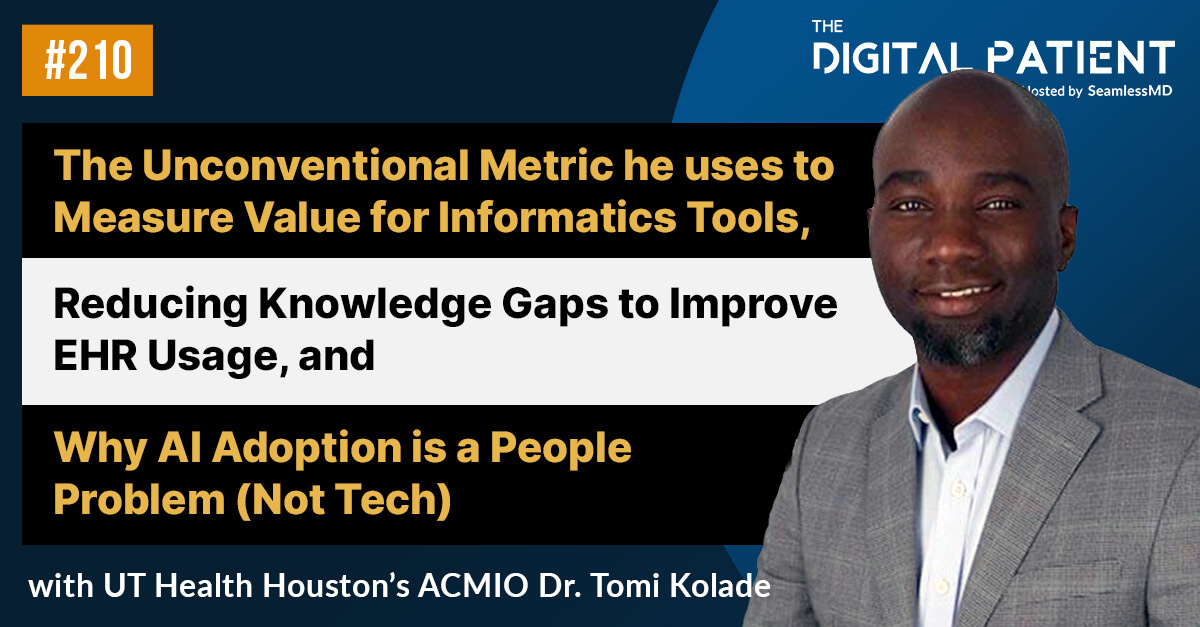
TDP 210: UT Health’s ACMIO Dr. Tomi Kolade: The Unconventional Metric he uses to Measure Value for Informatics Tools, Reducing Knowledge Gaps to Improve EHR Usage, and Why AI Adoption is a People Problem

January 6, 2026
By
Seamless

Subscribe on: RSS | SPOTIFY | APPLE PODCAST | GOOGLE | BREAKER | ANCHOR

On this episode of The Digital Patient, Dr. Joshua Liu, Co-founder & CEO of SeamlessMD, and colleague, Alan Sardana, chat with Dr. Tomi Kolade, Assistant Chief Medical Information Officer at UT Health Houston, about "The Unconventional Metric he uses to Measure Value for Informatics Tools, Reducing Knowledge Gaps to Improve EHR Usage, Why AI Adoption is a People Problem, and more..." Click the play button to listen or read the show notes below.

Audio:

Guest(s):

  • Dr. Tomi Kolade, Assistant Chief Medical Information Officer at UT Health Houston
  • Dr. Joshua Liu, Co-founder & CEO at SeamlessMD

Episode 210 - Show Notes:

[00:00:07] Episode preview

[00:05:05] Why practicing medicine in Nigeria taught Dr. Kolade that limited resources force intentional decision-making, and that technology should support clinical judgment “not drown it,” especially in an abundant system full of noise and unnecessary layers.

[00:06:05] How the patient relationship can be part of the treatment plan, and why Dr. Kolade believes stronger trust and community connection could dramatically improve outcomes in the U.S.

[00:06:57] How many "EHR broken” complaints are actually user error or knowledge gaps, which is why he emphasizes recurrent, tailored training rather than adding more technology or fixing problems that aren’t real.

[00:10:52] How a past dictation software rollout taught UT Health to be cautious with new tech: 8,000 licenses purchased, only ~15% adoption, and costly long-term contracts with low usage.

[00:11:25] How UT Health approached ambient AI differently by rolling out softly, starting with champions, validating fit over months, and avoiding long contracts that create lock-in.

[00:12:52] How training thousands of clinicians shaped Dr. Kolade's leadership style by building patience, letting clinicians vent, listening before offering solutions, and sharing product roadmaps so providers feel hope that things will improve.

[00:13:57] How he expects AI to reshape EHR training and workflows through instant customization, with AI preparing visit summaries, proposing orders, and helping clinicians spend more time focused on the patient.

[00:18:30] Why ambient AI pilots are not a tech journey but a people journey that require specialty-specific adoption plans and true champions who understand the tool.

[00:19:11] How different specialties value different benefits: orthopedics prioritized time savings, behavioral health valued emotional nuance, and family medicine wanted better support for long, complex visits and note personalization.

[00:21:29] The “funny metric” Dr. Kolade uses to see if a tool is being used—how fast people complain when the tool goes down.

[00:23:16] How he draws the line with agentic AI is keeping clinicians in control, requiring final sign-off, and tracking “how quickly do physicians endorse AI work” as a readiness signal.

[00:26:45] Why he believes ambient AI can humanize care is simple: “less clicks means more empathy,” helping clinicians stop treating the EHR as the “second patient” and refocus on human connection.

[00:29:07] What patients want most from digital journeys is clear communication, quick access, less wasted time, and experiences that reflect their preferences so they feel like they “own their care.”

Fast 5 Lightning Round:

  1. What is your favorite book or book you’ve gifted the most?
    How to think like a Roman Emperor by Donald J. Robertson
  2. If you could instantly master any skill, what would it be?
    Deep work.
  3. Would you rather have Super strength, super speed, or the ability to read people’s minds?
    Mind reading... in a customizable way... I don’t wanna know their secrets… but I just wanna be able to support them better.
  4. What is something in healthcare you believe others might find insane?
    Patients should be the owner of the medical record.
  5. What is the last movie or TV show you saw?
    The Accountant 2. Ben Affleck is one of my favorites… that movie teaches precision and being dedicated to protecting people no matter what.

The Digital Patient has been recognized as Feedspot's #1 Patient Engagement Podcast of 2025. Thank you to our listeners for making this happen!
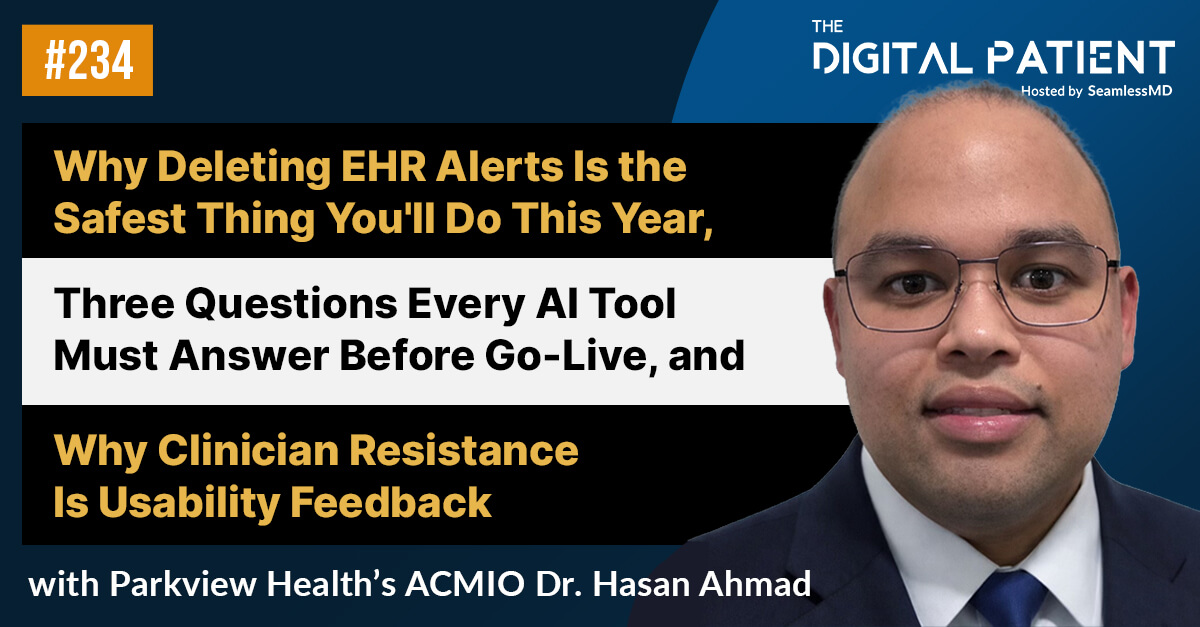
TDP 210: UT Health’s ACMIO Dr. Tomi Kolade: The Unconventional Metric he uses to Measure Value for Informatics Tools, Reducing Knowledge Gaps to Improve EHR Usage, and Why AI Adoption is a People Problem

Posted by:
Seamless
on
January 6, 2026

Subscribe on: RSS | SPOTIFY | APPLE PODCAST | GOOGLE | BREAKER | ANCHOR

On this episode of The Digital Patient, Dr. Joshua Liu, Co-founder & CEO of SeamlessMD, and colleague, Alan Sardana, chat with Dr. Tomi Kolade, Assistant Chief Medical Information Officer at UT Health Houston, about "The Unconventional Metric he uses to Measure Value for Informatics Tools, Reducing Knowledge Gaps to Improve EHR Usage, Why AI Adoption is a People Problem, and more..." Click the play button to listen or read the show notes below.

Audio:

Guest(s):

  • Dr. Tomi Kolade, Assistant Chief Medical Information Officer at UT Health Houston
  • Dr. Joshua Liu, Co-founder & CEO at SeamlessMD

Episode 210 - Show Notes:

[00:00:07] Episode preview

[00:05:05] Why practicing medicine in Nigeria taught Dr. Kolade that limited resources force intentional decision-making, and that technology should support clinical judgment “not drown it,” especially in an abundant system full of noise and unnecessary layers.

[00:06:05] How the patient relationship can be part of the treatment plan, and why Dr. Kolade believes stronger trust and community connection could dramatically improve outcomes in the U.S.

[00:06:57] How many "EHR broken” complaints are actually user error or knowledge gaps, which is why he emphasizes recurrent, tailored training rather than adding more technology or fixing problems that aren’t real.

[00:10:52] How a past dictation software rollout taught UT Health to be cautious with new tech: 8,000 licenses purchased, only ~15% adoption, and costly long-term contracts with low usage.

[00:11:25] How UT Health approached ambient AI differently by rolling out softly, starting with champions, validating fit over months, and avoiding long contracts that create lock-in.

[00:12:52] How training thousands of clinicians shaped Dr. Kolade's leadership style by building patience, letting clinicians vent, listening before offering solutions, and sharing product roadmaps so providers feel hope that things will improve.

[00:13:57] How he expects AI to reshape EHR training and workflows through instant customization, with AI preparing visit summaries, proposing orders, and helping clinicians spend more time focused on the patient.

[00:18:30] Why ambient AI pilots are not a tech journey but a people journey that require specialty-specific adoption plans and true champions who understand the tool.

[00:19:11] How different specialties value different benefits: orthopedics prioritized time savings, behavioral health valued emotional nuance, and family medicine wanted better support for long, complex visits and note personalization.

[00:21:29] The “funny metric” Dr. Kolade uses to see if a tool is being used—how fast people complain when the tool goes down.

[00:23:16] How he draws the line with agentic AI is keeping clinicians in control, requiring final sign-off, and tracking “how quickly do physicians endorse AI work” as a readiness signal.

[00:26:45] Why he believes ambient AI can humanize care is simple: “less clicks means more empathy,” helping clinicians stop treating the EHR as the “second patient” and refocus on human connection.

[00:29:07] What patients want most from digital journeys is clear communication, quick access, less wasted time, and experiences that reflect their preferences so they feel like they “own their care.”

Fast 5 Lightning Round:

  1. What is your favorite book or book you’ve gifted the most?
    How to think like a Roman Emperor by Donald J. Robertson
  2. If you could instantly master any skill, what would it be?
    Deep work.
  3. Would you rather have Super strength, super speed, or the ability to read people’s minds?
    Mind reading... in a customizable way... I don’t wanna know their secrets… but I just wanna be able to support them better.
  4. What is something in healthcare you believe others might find insane?
    Patients should be the owner of the medical record.
  5. What is the last movie or TV show you saw?
    The Accountant 2. Ben Affleck is one of my favorites… that movie teaches precision and being dedicated to protecting people no matter what.

The Digital Patient has been recognized as Feedspot's #1 Patient Engagement Podcast of 2025. Thank you to our listeners for making this happen!

Recent news from SeamlessMD

How Canadian Hospitals Are Transforming Patient Care with Digital Care Journeys
January 5, 2026

How Canadian Hospitals Are Transforming Patient Care with Digital Care Journeys

Learn More
TDP 209: Houston Methodist’s Michelle Stansbury: Why Siloed Innovation Labs Don’t Work, Making Innovation Financially Accountable, and Why Health Systems Must Disrupt Themselves or Risk Being Disrupted
December 18, 2025

TDP 209: Houston Methodist’s Michelle Stansbury: Why Siloed Innovation Labs Don’t Work, Making Innovation Financially Accountable, and Why Health Systems Must Disrupt Themselves or Risk Being Disrupted

Learn More
TDP 208: Rush University Medical Center’s ACMIO Dr. Juan C. Rojas: Where AI Performs Best in Clinical Care Today, Evaluating AI like a New Drug or Device, and Using AI to Identify High-Risk Patients When Data is Incomplete
December 16, 2025

TDP 208: Rush University Medical Center’s ACMIO Dr. Juan C. Rojas: Where AI Performs Best in Clinical Care Today, Evaluating AI like a New Drug or Device, and Using AI to Identify High-Risk Patients When Data is Incomplete

Learn More