
Healthcare Innovation Stories

Succeeding with Digital Health even when the Novelty Wears Off: What WRHN's Digital Care Journey Program Shows Four Years In

March 31, 2026
By
Seamless

Pilot data comes with an asterisk.

Not always a fatal one – but an honest one. The teams running a new digital program are paying close attention. Patients who opt into something new tend to be motivated. Clinical champions are engaged. The combination of novelty and focus can produce early results that quietly drift once the program becomes business as usual.

The question worth asking about any digital care program isn't "did it work in year one?" It's "is it still succeeding when it's no longer new?"

Waterloo Regional Health Network launched SeamlessMD for hip and knee replacement surgery in November 2021: a mobile and web-based virtual companion that guides patients through their entire surgical journey using automated education, task reminders, and self-care algorithms. The platform also enables WRHN’s care teams to remotely monitor a patient’s recovery progress and symptoms in real-time, providing clinical alerts and dashboards to facilitate earlier intervention.

The 2023 outcomes analysis captured what the early phase produced. A new December 2025 analysis looks at the same initiative three years later - at more than three times the original patient volume.

What the early data showed
2023 WRHN Hip Replacement Surgery Outcomes Analysis
2023 Knee Replacement Surgery Outcomes Analysis

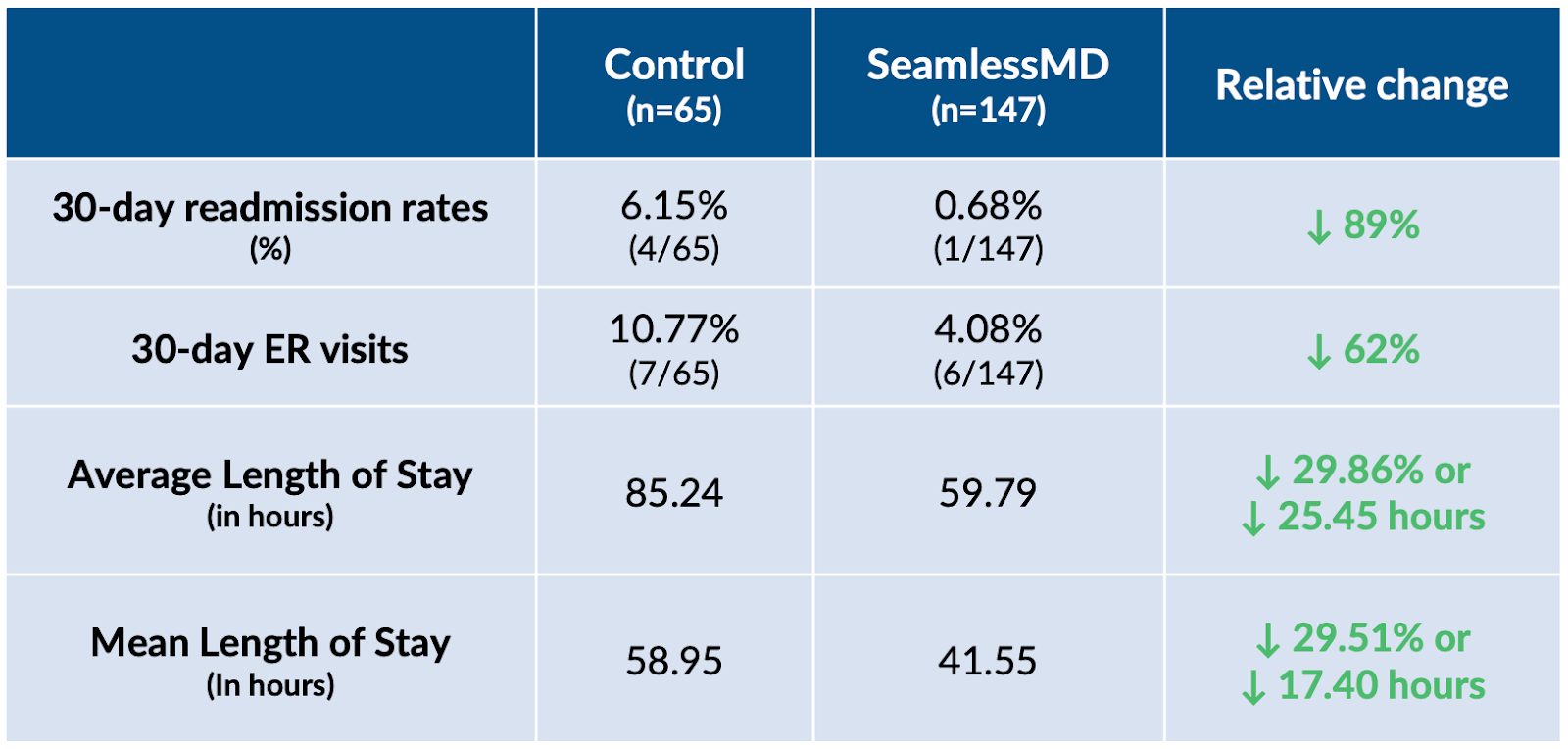
The 2023 outcomes analysis compared SeamlessMD patients against a control group for both hip and knee surgery. For hip patients (147 using SeamlessMD, 65 controls), 30-day readmissions dropped 89%, from 6.15% to 0.68%. ER visits fell 62%. The average length of stay decreased by about 25 hours.

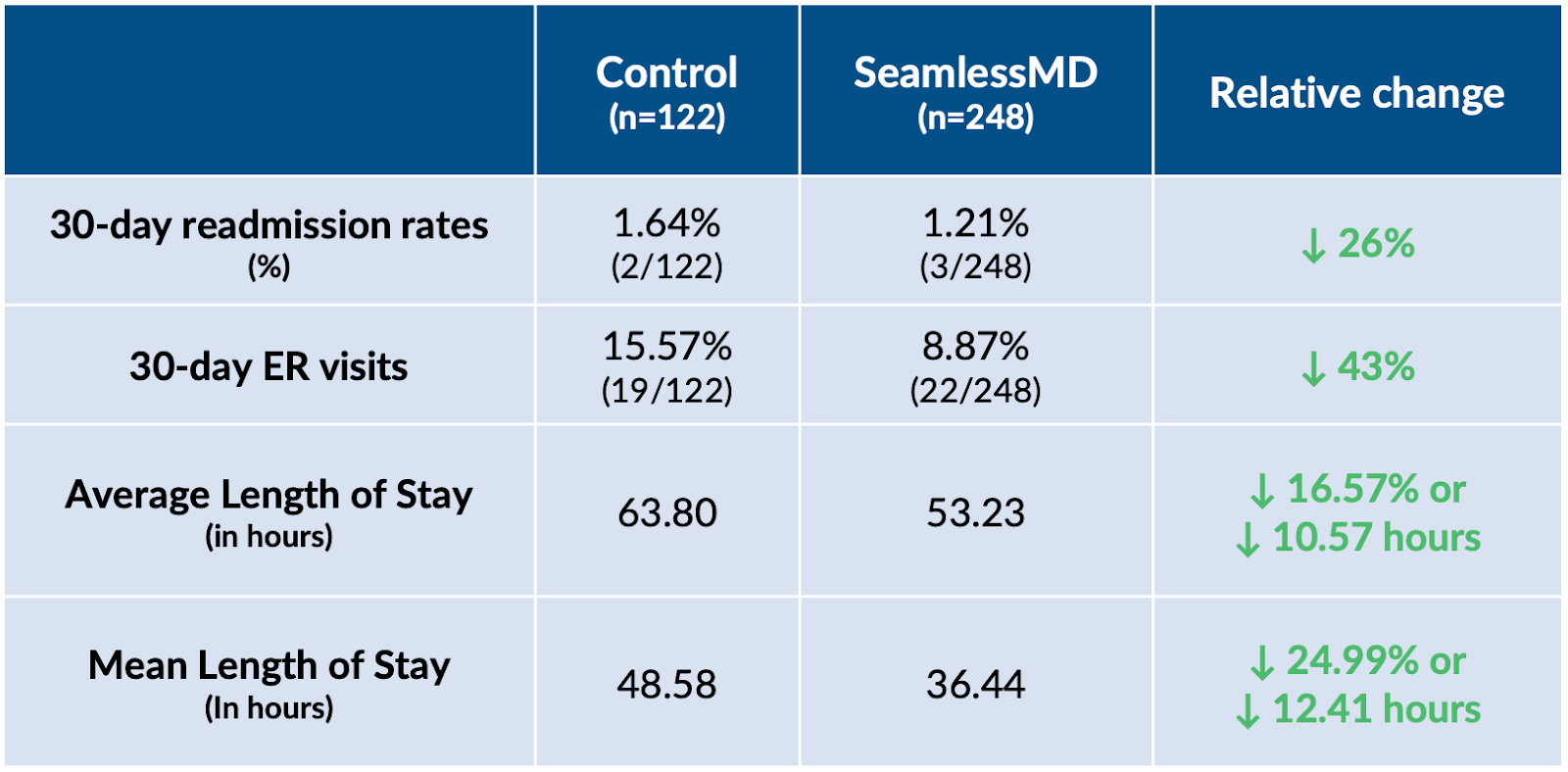
Knee surgery followed the same pattern: 43% fewer ER visits, 26% fewer readmissions, a meaningful reduction in length of stay across 248 SeamlessMD patients versus 122 controls.

Patient experience metrics held too. 95% of hip patients and 94% of knee patients said they would recommend the program. 35% said SeamlessMD prevented at least one call to the hospital.

Those numbers made a credible case for the program, but the big question was: after a couple more years, would the results still hold?

A more rigorous look, four years later

The December 2025 analysis covers January 2024 through June 2025 - a completely different patient cohort than the 2023 study. This isn't a continuation of earlier data. It's an independent look at the program with fresh patients and a different comparison design.

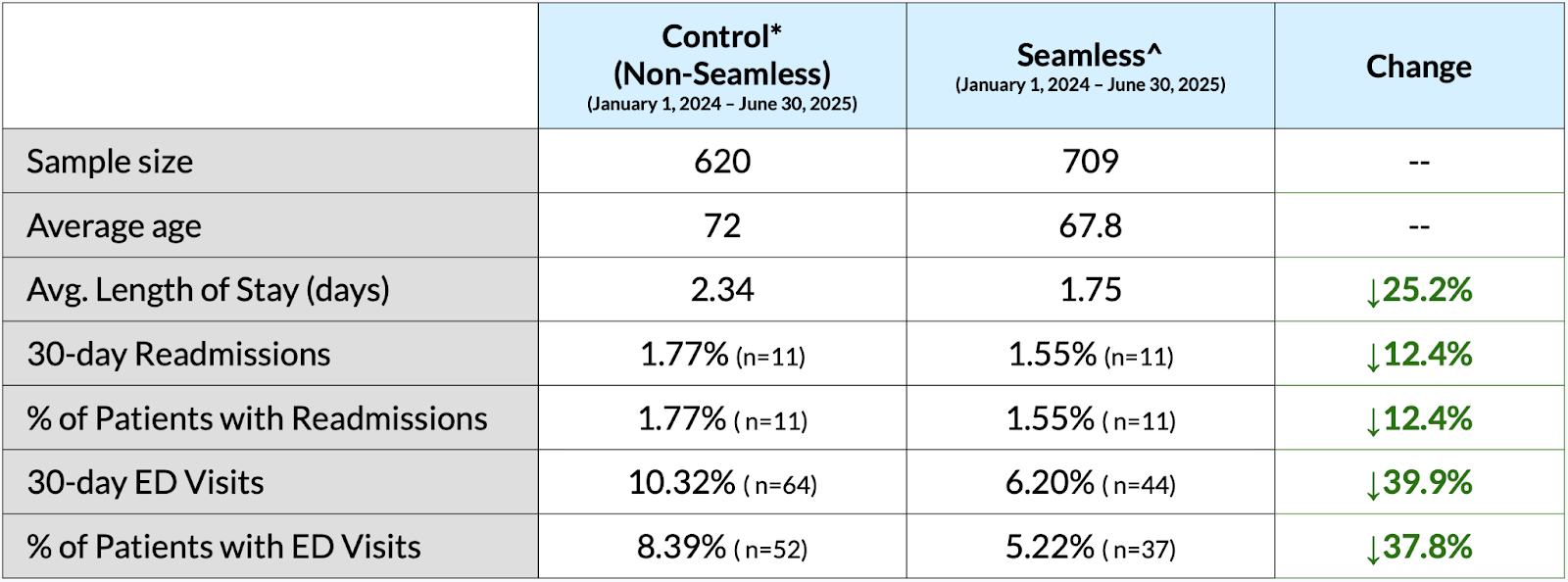
Sample sizes grew substantially. The 2025 hip analysis includes 382 SeamlessMD patients and 395 controls, compared to 147 and 65 in 2023. The knee analysis covers 709 SeamlessMD patients and 620 controls - nearly three times and five times the original groups, respectively.

What the 2025 data shows

2025 Hip Replacement Surgery Outcomes Analysis

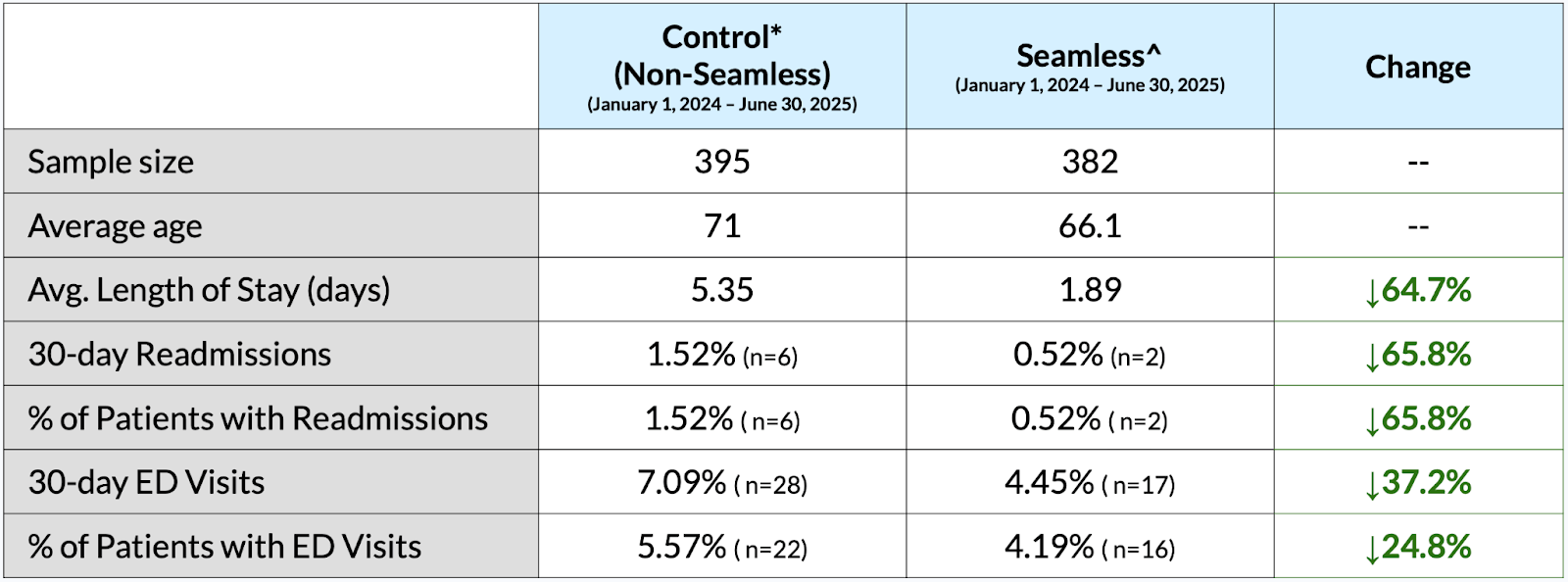
For hip surgery, SeamlessMD patients averaged 1.89 days in hospital versus 5.35 days in the control group, a 64.7% reduction in average length of stay. Thirty-day readmissions were 65.8% lower (0.52% vs. 1.52%). Emergency department visits dropped 37.2%.

2025 Knee Replacement Surgery Outcomes Analysis

For knee surgery, average length of stay was 25.2% lower. Thirty-day ED visits were 39.9% lower. Readmissions were 12.4% lower.

What holds across both analyses is the direction: SeamlessMD patients consistently show better outcomes than the non-Seamless group, at larger patient volumes.

Colorectal surgery: first data from a newer pathway

2025 Colorectal Surgery Outcomes Analysis

The 2025 analysis also includes the first outcomes data from WRHN's colorectal surgery pathway, added after orthopaedics had established its evidence base.

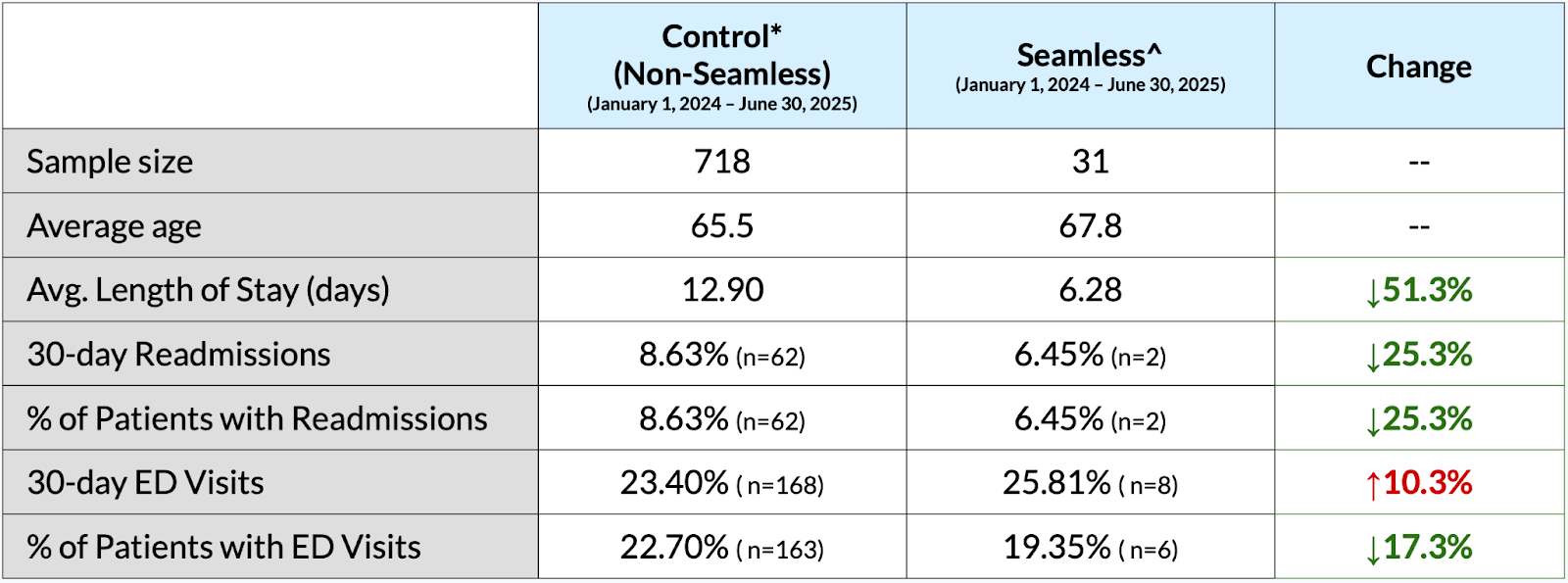
For colorectal patients using SeamlessMD, average length of stay was 6.28 days versus 12.90 in the control group, a 51.3% reduction. Readmissions were 25.3% lower (6.45% vs. 8.63%).

This initial analysis includes 31 patients. That's a small sample, and it limits how much weight these figures can carry. But these results set a baseline for future measurement and represent a third surgical pathway, active, generating data, and heading toward the same kind of evidence cycle that now supports the orthopaedic program.

What "at scale" actually means

There's a reasonable concern that digital care programs perform best when someone is watching – when a clinical champion is actively advocating, implementation teams are paying close attention, leadership is engaged. The worry is that results erode once the program becomes routine.

WRHN's 2025 data doesn't disprove that concern for every context. But at this institution, over this time period, the results held. The analysis covers a program four years into operation, at patient volumes that reflect routine surgical care rather than a managed pilot.

"In the data available to us through the dashboards, we can efficiently track patient recovery at home, and address any post-surgical complications," said Dr. Matthew Snider, orthopaedic surgeon at Waterloo Regional Health Network. That's a plain description of what the 2025 data supports: a program that gives care teams visibility into the post-discharge window where most complications develop – and that continues doing so at scale.

For clinical leaders evaluating digital care programs, WRHN's four-year trajectory offers something that's genuinely hard to find: a second look, with a larger patient population and a stronger comparison group, that still points in the same direction.

“Partnering with SeamlessMD has allowed us to extend our care beyond the hospital walls and stay connected to patients after discharge, ensuring our patients feel supported and informed throughout their entire recovery journey. The measurable improvements we’ve seen in patient outcomes and engagement reflect our commitment to providing the highest quality of care at WRHN.” –– Lisa Buttazzoni, Program Director for Surgical Services

Succeeding with Digital Health even when the Novelty Wears Off: What WRHN's Digital Care Journey Program Shows Four Years In

Posted by:
Seamless
on
March 31, 2026

Pilot data comes with an asterisk.

Not always a fatal one – but an honest one. The teams running a new digital program are paying close attention. Patients who opt into something new tend to be motivated. Clinical champions are engaged. The combination of novelty and focus can produce early results that quietly drift once the program becomes business as usual.

The question worth asking about any digital care program isn't "did it work in year one?" It's "is it still succeeding when it's no longer new?"

Waterloo Regional Health Network launched SeamlessMD for hip and knee replacement surgery in November 2021: a mobile and web-based virtual companion that guides patients through their entire surgical journey using automated education, task reminders, and self-care algorithms. The platform also enables WRHN’s care teams to remotely monitor a patient’s recovery progress and symptoms in real-time, providing clinical alerts and dashboards to facilitate earlier intervention.

The 2023 outcomes analysis captured what the early phase produced. A new December 2025 analysis looks at the same initiative three years later - at more than three times the original patient volume.

What the early data showed
2023 WRHN Hip Replacement Surgery Outcomes Analysis
2023 Knee Replacement Surgery Outcomes Analysis

The 2023 outcomes analysis compared SeamlessMD patients against a control group for both hip and knee surgery. For hip patients (147 using SeamlessMD, 65 controls), 30-day readmissions dropped 89%, from 6.15% to 0.68%. ER visits fell 62%. The average length of stay decreased by about 25 hours.

Knee surgery followed the same pattern: 43% fewer ER visits, 26% fewer readmissions, a meaningful reduction in length of stay across 248 SeamlessMD patients versus 122 controls.

Patient experience metrics held too. 95% of hip patients and 94% of knee patients said they would recommend the program. 35% said SeamlessMD prevented at least one call to the hospital.

Those numbers made a credible case for the program, but the big question was: after a couple more years, would the results still hold?

A more rigorous look, four years later

The December 2025 analysis covers January 2024 through June 2025 - a completely different patient cohort than the 2023 study. This isn't a continuation of earlier data. It's an independent look at the program with fresh patients and a different comparison design.

Sample sizes grew substantially. The 2025 hip analysis includes 382 SeamlessMD patients and 395 controls, compared to 147 and 65 in 2023. The knee analysis covers 709 SeamlessMD patients and 620 controls - nearly three times and five times the original groups, respectively.

What the 2025 data shows
2025 Hip Replacement Surgery Outcomes Analysis

For hip surgery, SeamlessMD patients averaged 1.89 days in hospital versus 5.35 days in the control group, a 64.7% reduction in average length of stay. Thirty-day readmissions were 65.8% lower (0.52% vs. 1.52%). Emergency department visits dropped 37.2%.
2025 Knee Replacement Surgery Outcomes Analysis

For knee surgery, average length of stay was 25.2% lower. Thirty-day ED visits were 39.9% lower. Readmissions were 12.4% lower.

What holds across both analyses is the direction: SeamlessMD patients consistently show better outcomes than the non-Seamless group, at larger patient volumes.

Colorectal surgery: first data from a newer pathway
2025 Colorectal Surgery Outcomes Analysis

The 2025 analysis also includes the first outcomes data from WRHN's colorectal surgery pathway, added after orthopaedics had established its evidence base.

For colorectal patients using SeamlessMD, average length of stay was 6.28 days versus 12.90 in the control group, a 51.3% reduction. Readmissions were 25.3% lower (6.45% vs. 8.63%).

This initial analysis includes 31 patients. That's a small sample, and it limits how much weight these figures can carry. But these results set a baseline for future measurement and represent a third surgical pathway, active, generating data, and heading toward the same kind of evidence cycle that now supports the orthopaedic program.

What "at scale" actually means

There's a reasonable concern that digital care programs perform best when someone is watching – when a clinical champion is actively advocating, implementation teams are paying close attention, leadership is engaged. The worry is that results erode once the program becomes routine.

WRHN's 2025 data doesn't disprove that concern for every context. But at this institution, over this time period, the results held. The analysis covers a program four years into operation, at patient volumes that reflect routine surgical care rather than a managed pilot.

"In the data available to us through the dashboards, we can efficiently track patient recovery at home, and address any post-surgical complications," said Dr. Matthew Snider, orthopaedic surgeon at Waterloo Regional Health Network. That's a plain description of what the 2025 data supports: a program that gives care teams visibility into the post-discharge window where most complications develop – and that continues doing so at scale.

For clinical leaders evaluating digital care programs, WRHN's four-year trajectory offers something that's genuinely hard to find: a second look, with a larger patient population and a stronger comparison group, that still points in the same direction.

“Partnering with SeamlessMD has allowed us to extend our care beyond the hospital walls and stay connected to patients after discharge, ensuring our patients feel supported and informed throughout their entire recovery journey. The measurable improvements we’ve seen in patient outcomes and engagement reflect our commitment to providing the highest quality of care at WRHN.” –– Lisa Buttazzoni, Program Director for Surgical Services
Recent news from SeamlessMD

Designing for both Parent and Child: How 5 Hospitals Brought Digital Care Journeys into Pediatrics
March 30, 2026

Designing for both Parent and Child: How 5 Hospitals Brought Digital Care Journeys into Pediatrics

Learn More
SeamlessMD Expands to Maternal Care across all of New Brunswick, Supporting Patients Through Pregnancy and Postpartum
March 26, 2026

SeamlessMD Expands to Maternal Care across all of New Brunswick, Supporting Patients Through Pregnancy and Postpartum

Learn More
TDP 222: Care New England’s CCIO Dr. Sara Helvey: What a Startup Failure Taught Her About Vendor Selection, Why AI Clinical Decision Support Keeps Backfiring, and What Comes After Ambient Documentation
March 26, 2026

TDP 222: Care New England’s CCIO Dr. Sara Helvey: What a Startup Failure Taught Her About Vendor Selection, Why AI Clinical Decision Support Keeps Backfiring, and What Comes After Ambient Documentation

Learn More