Digital Patient Podcast

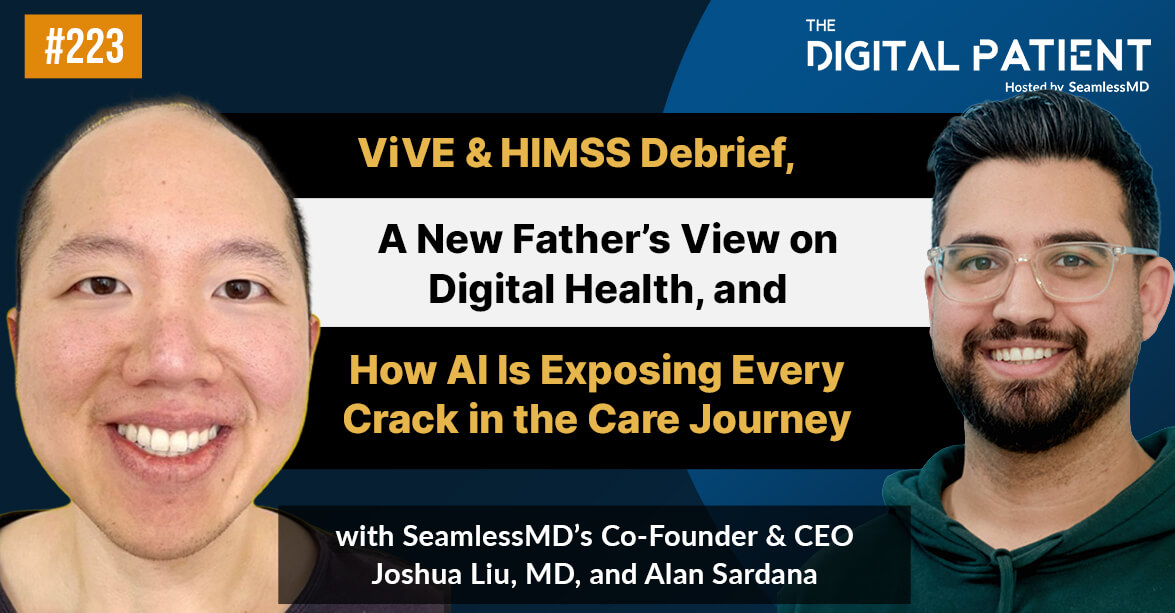
TDP 223: ViVE & HIMSS Debrief, A New Father’s View on Digital Health, and How AI Is Exposing Every Crack in the Care Journey

April 9, 2026
By
seamless

Subscribe on: RSS | SPOTIFY | APPLE PODCAST | GOOGLE | BREAKER | ANCHOR

Josh and Alan reunite for a casual “solo” episode to catch up on a busy few weeks – from Josh becoming a new father to key takeaways from ViVE and HIMSS. They break down what Josh learned firsthand navigating the maternity and postpartum journey, including gaps in digital health, confusing patient portal experiences, and how AI tools are already filling in between clinical visits. They also touch on insights from the Feb/Mar conference circuit, covering AI adoption trends, why digital health projects fail, and what health systems are getting right (and wrong) when it comes to patient experience. Click the play button to listen or read the show notes below.

Audio:

Guest(s):

  • Joshua Liu, MD (@joshuapliu), Co-founder & CEO at SeamlessMD

Episode 223 - Show Notes:

[00:00:44] Josh shares he recently became a father, prompting a temporary pause in new podcast recordings while adjusting to newborn life.

[00:02:18] Josh reflects on experiencing a full maternity care journey as a caregiver, shifting his perspective on digital health and AI from theory to lived reality.

[00:03:30] A digital pregnancy tool was available via the patient portal—but never communicated by the care team—leading to zero adoption.

[00:05:11] Poorly designed notifications (e.g., “20 tasks overdue”) created unnecessary anxiety due to lack of context and onboarding.

[00:06:36] Postpartum care gaps become evident, with limited monitoring and long delays between visits, pushing families to seek answers elsewhere.

[00:06:54] Josh describes relying on tools like Gemini, DoximityGPT, OpenEvidence, and other AI copilots for real-time guidance during postpartum recovery.

[00:09:18] Despite digital gaps, the human care team (OBs and nurses) delivered exceptional, empathetic care—highlighting the irreplaceable role of people in healthcare.

[00:11:18] The discussion explores AI in care delivery, noting potential benefits (24/7 support) but also risks like losing diverse human perspectives.

[00:13:16] A newborn jaundice scare illustrates how confusing lab results in patient portals can drive anxiety without proper interpretation.

[00:15:16] AI tools provide faster, more detailed explanations of test results than traditional provider communication, offering interim reassurance.

[00:16:48] Josh emphasizes that access to and understanding of AI tools is a privilege—not all patients can safely interpret or use them effectively.

[00:20:30] ViVE conference recap begins, with key themes centered around AI adoption and networking across digital health leaders.

[00:21:55] Insight from ViVE: new nurses entering the workforce expect AI tools, making AI adoption a competitive factor for health systems.

[00:22:55] Failed digital health pilots create long-term resistance—highlighting the importance of getting implementations right the first time.

[00:25:20] MD Anderson example: using analytics to personalize cancer screening cadence based on patient risk, improving system efficiency.

[00:30:08] HIMSS recap: Josh presents on patient experience and AI, focusing on how AI exposes care gaps and can help fill them between visits.

[00:31:33] Key takeaway: AI should complement—not replace—core fundamentals like change management, clinical content, and staff engagement.

[00:33:27] Real-world validation: Josh’s own postpartum experience reinforces the need for both AI-driven answers and non-AI workflows like reminders and education.

[00:35:36] Not all AI approaches work equally—voice agents are effective for inbound requests but struggle with outbound patient engagement.

[00:37:34] HIMSS overall theme: AI dominates discussions across sessions, signaling continued momentum in healthcare transformation.

[00:41:03] Lighthearted Vegas story: Alan turns a $100 seat swap into a $400 casino win, underscoring the unpredictable nature of conference travel.

[00:48:38] Looking ahead, future conferences (HIMSS in Chicago, ViVE, Becker’s) remain key venues for connecting and advancing digital health conversations.

The Digital Patient has been recognized as Feedspot's #1 Patient Engagement Podcast of 2025. Thank you to our listeners for making this happen!
TDP 223: ViVE & HIMSS Debrief, A New Father’s View on Digital Health, and How AI Is Exposing Every Crack in the Care Journey

Posted by:
seamless
on
April 9, 2026

Subscribe on: RSS | SPOTIFY | APPLE PODCAST | GOOGLE | BREAKER | ANCHOR

Josh and Alan reunite for a casual “solo” episode to catch up on a busy few weeks – from Josh becoming a new father to key takeaways from ViVE and HIMSS. They break down what Josh learned firsthand navigating the maternity and postpartum journey, including gaps in digital health, confusing patient portal experiences, and how AI tools are already filling in between clinical visits. They also touch on insights from the Feb/Mar conference circuit, covering AI adoption trends, why digital health projects fail, and what health systems are getting right (and wrong) when it comes to patient experience. Click the play button to listen or read the show notes below.

Audio:

Guest(s):

  • Joshua Liu, MD (@joshuapliu), Co-founder & CEO at SeamlessMD

Episode 223 - Show Notes:

[00:00:44] Josh shares he recently became a father, prompting a temporary pause in new podcast recordings while adjusting to newborn life.

[00:02:18] Josh reflects on experiencing a full maternity care journey as a caregiver, shifting his perspective on digital health and AI from theory to lived reality.

[00:03:30] A digital pregnancy tool was available via the patient portal—but never communicated by the care team—leading to zero adoption.

[00:05:11] Poorly designed notifications (e.g., “20 tasks overdue”) created unnecessary anxiety due to lack of context and onboarding.

[00:06:36] Postpartum care gaps become evident, with limited monitoring and long delays between visits, pushing families to seek answers elsewhere.

[00:06:54] Josh describes relying on tools like Gemini, DoximityGPT, OpenEvidence, and other AI copilots for real-time guidance during postpartum recovery.

[00:09:18] Despite digital gaps, the human care team (OBs and nurses) delivered exceptional, empathetic care—highlighting the irreplaceable role of people in healthcare.

[00:11:18] The discussion explores AI in care delivery, noting potential benefits (24/7 support) but also risks like losing diverse human perspectives.

[00:13:16] A newborn jaundice scare illustrates how confusing lab results in patient portals can drive anxiety without proper interpretation.

[00:15:16] AI tools provide faster, more detailed explanations of test results than traditional provider communication, offering interim reassurance.

[00:16:48] Josh emphasizes that access to and understanding of AI tools is a privilege—not all patients can safely interpret or use them effectively.

[00:20:30] ViVE conference recap begins, with key themes centered around AI adoption and networking across digital health leaders.

[00:21:55] Insight from ViVE: new nurses entering the workforce expect AI tools, making AI adoption a competitive factor for health systems.

[00:22:55] Failed digital health pilots create long-term resistance—highlighting the importance of getting implementations right the first time.

[00:25:20] MD Anderson example: using analytics to personalize cancer screening cadence based on patient risk, improving system efficiency.

[00:30:08] HIMSS recap: Josh presents on patient experience and AI, focusing on how AI exposes care gaps and can help fill them between visits.

[00:31:33] Key takeaway: AI should complement—not replace—core fundamentals like change management, clinical content, and staff engagement.

[00:33:27] Real-world validation: Josh’s own postpartum experience reinforces the need for both AI-driven answers and non-AI workflows like reminders and education.

[00:35:36] Not all AI approaches work equally—voice agents are effective for inbound requests but struggle with outbound patient engagement.

[00:37:34] HIMSS overall theme: AI dominates discussions across sessions, signaling continued momentum in healthcare transformation.

[00:41:03] Lighthearted Vegas story: Alan turns a $100 seat swap into a $400 casino win, underscoring the unpredictable nature of conference travel.

[00:48:38] Looking ahead, future conferences (HIMSS in Chicago, ViVE, Becker’s) remain key venues for connecting and advancing digital health conversations.

The Digital Patient has been recognized as Feedspot's #1 Patient Engagement Podcast of 2025. Thank you to our listeners for making this happen!

Recent news from SeamlessMD

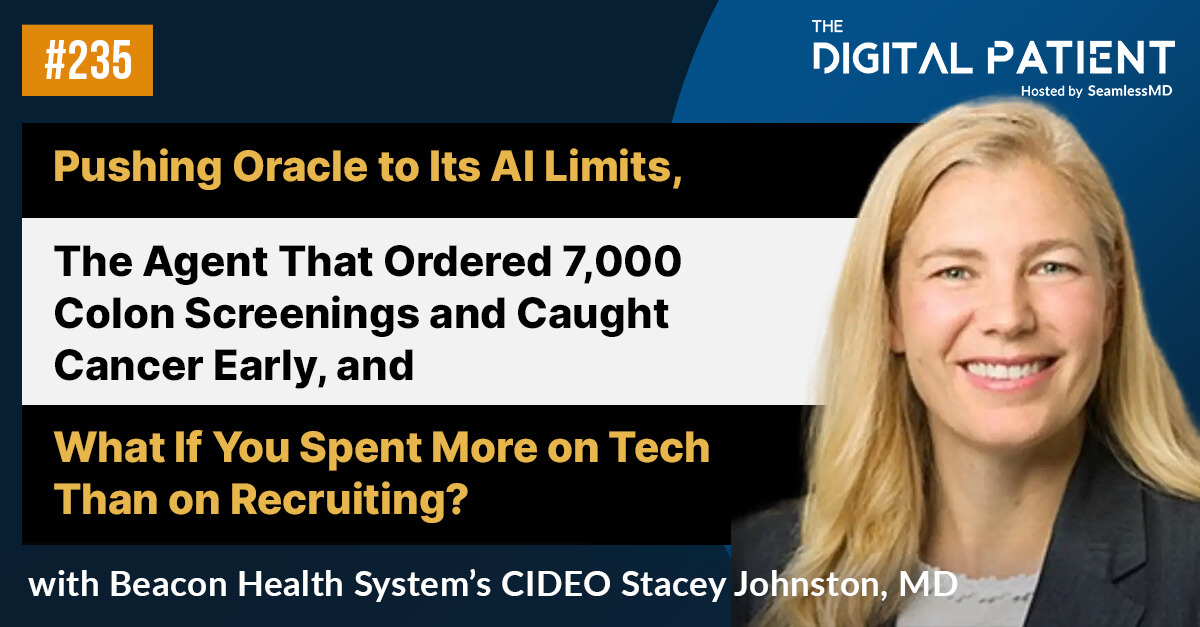
235: Beacon's CIDEO Dr. Stacey Johnston: Pushing Oracle to Its AI Limits, The Agent That Ordered 7,000 Colon Screenings and Caught Cancer Early, and What If You Spent More on Tech Than on Recruiting?
August 20, 2026

235: Beacon's CIDEO Dr. Stacey Johnston: Pushing Oracle to Its AI Limits, The Agent That Ordered 7,000 Colon Screenings and Caught Cancer Early, and What If You Spent More on Tech Than on Recruiting?

Learn More
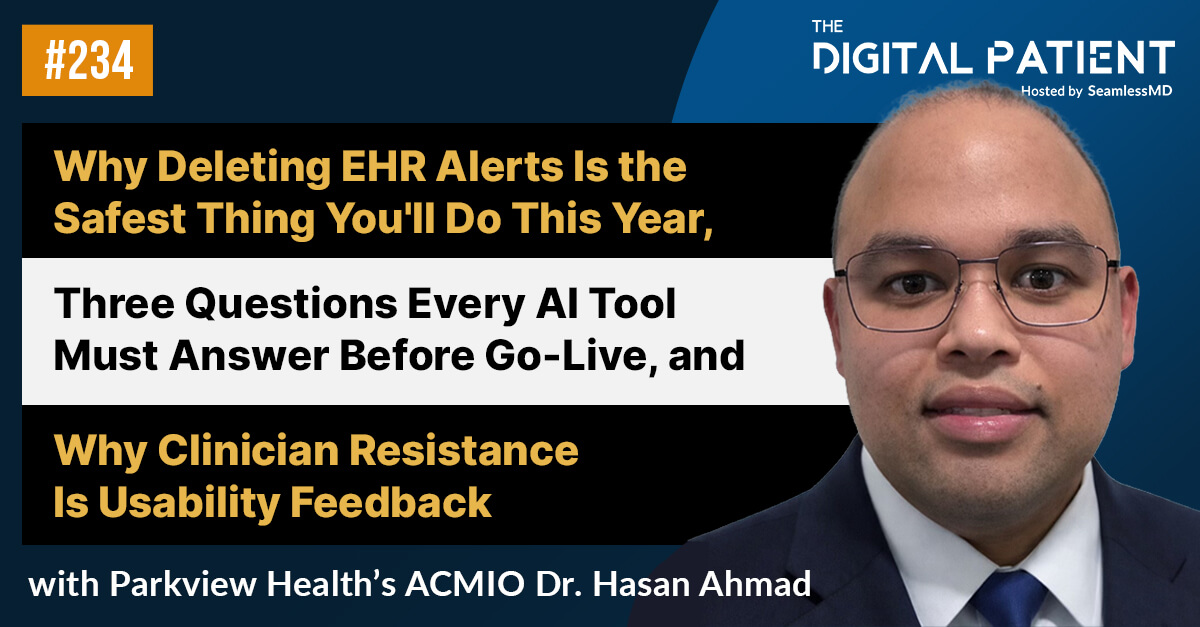
234: Parkview's ACMIO Dr. Hasan Ahmad: Why Deleting EHR Alerts Is the Safest Thing You'll Do This Year, Three Questions Every AI Tool Must Answer Before Go-Live, and Why Resistance Is Usability Feedback
August 13, 2026

234: Parkview's ACMIO Dr. Hasan Ahmad: Why Deleting EHR Alerts Is the Safest Thing You'll Do This Year, Three Questions Every AI Tool Must Answer Before Go-Live, and Why Resistance Is Usability Feedback

Learn More
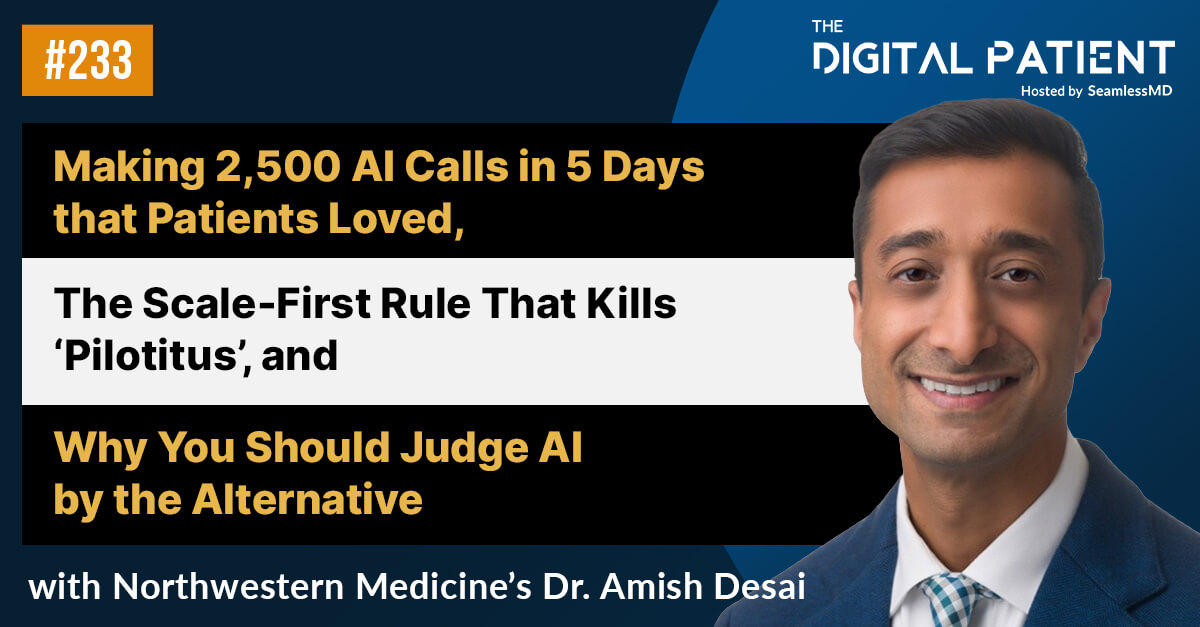
233: Northwestern's CMO, Pop Health Dr. Amish Desai: Making 2,500 AI Calls in 5 Days that Patients Loved,  The Scale-First Rule That Kills Pilotitus, and Why You Should Judge AI by the Alternative
July 23, 2026

233: Northwestern's CMO, Pop Health Dr. Amish Desai: Making 2,500 AI Calls in 5 Days that Patients Loved,  The Scale-First Rule That Kills Pilotitus, and Why You Should Judge AI by the Alternative

Learn More