.svg)


August 31, 2026
At the SeamlessMD 2026 Customer Conference, we had the pleasure of sitting down with Nerissa Taylor, Manager of Operations for the Virtual Care Program and MyCarePortal at London Health Sciences Centre (LHSC), to hear the story behind one of the most thoughtful and complex programs built on our platform to date: a digital care journey purpose-built for pediatric trauma patients and their families.
The Challenge: Discharged, Disconnected, and Far from Home
The Children's Hospital at London Health Sciences Centre is one of only four pediatric trauma hospitals in Ontario, serving the most seriously injured children across southwestern Ontario. That regional reach comes with a significant challenge: more than 50% of trauma admissions come from outside the hospital's immediate area. When a child is discharged, families don't just go home - they go far from home, often still in shock, and suddenly without the care team they've come to rely on.
Making matters more difficult, approximately 30% of these patients have no family physician to follow up with, leaving many families with no clear path to care if complications arise. The result was predictable: high ED visit rates, anxious families, and a persistent sense of disconnection after discharge.
Patient feedback made the gap impossible to ignore. Families consistently reported that the care received in hospital was excellent, and it was what came after that left them feeling lost.
"It was after discharge that they felt: I didn't know what to do, I didn't know what to expect, I felt disconnected," Nerissa shared. That feedback became the catalyst for the program and the vision of Dr. Neil Merritt, the pediatric trauma surgeon who first championed it.
The Innovation: A Trauma Care Journey Built for Families
Because no two pediatric trauma patients are the same - a child might present with a concussion, a fracture, a liver injury, or all three - the team at LHSC designed a highly flexible, family-centered program from the ground up. The result is a care journey that adapts to the injury, the age of the child, and the communication needs of the family.
1. Injury-Specific Education and Monitoring
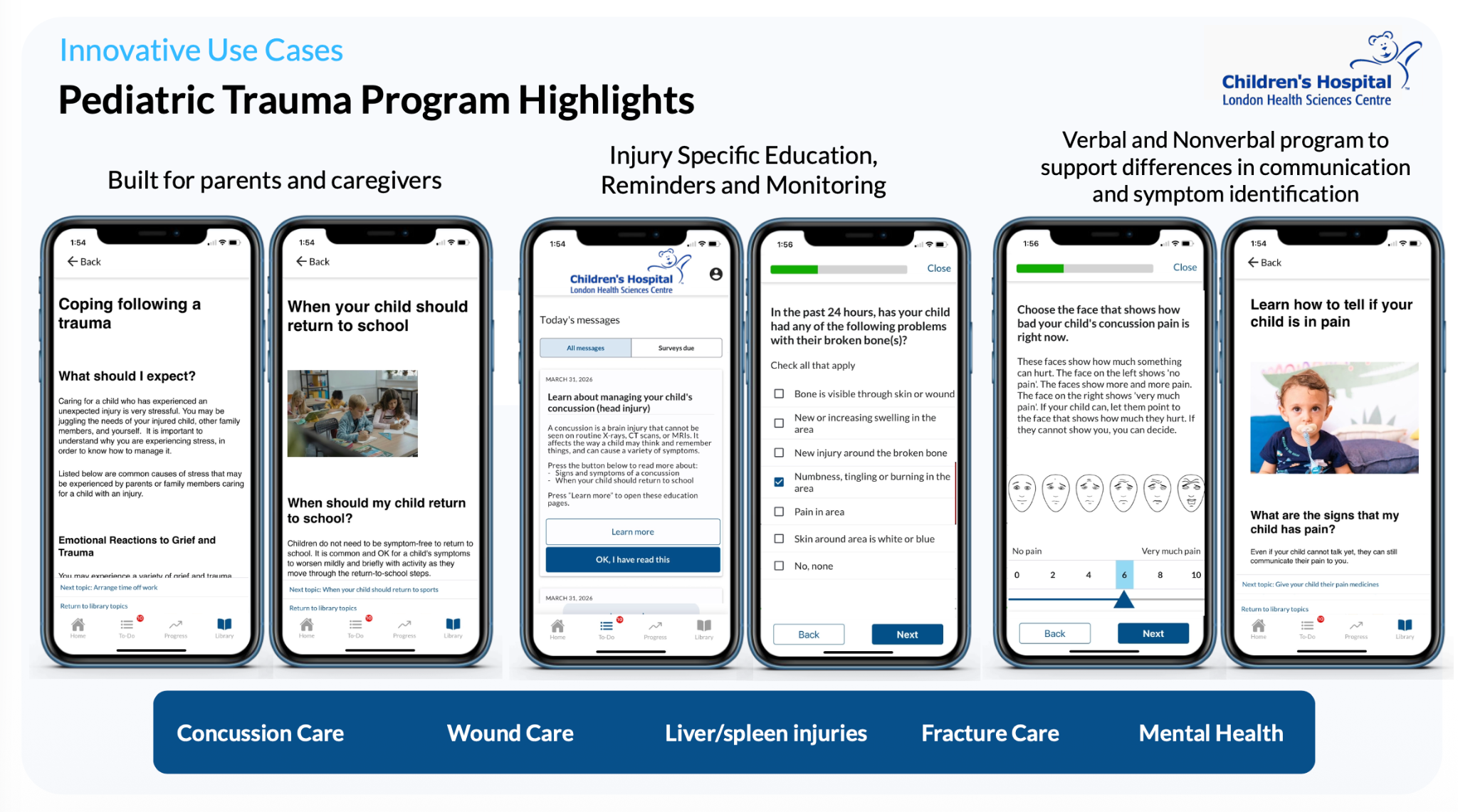
Rather than offering a one-size-fits-all experience, the program uses a setup survey to identify a patient's specific injuries - concussion, wound care, liver or spleen injury, or fracture - and tailors the content and health checks accordingly. Families receive education and monitoring specific to what their child actually experienced, reducing information overload while ensuring nothing important is missed.
2. Verbal and Non-Verbal Pathways
One of the most innovative design decisions was building two distinct pathways based on a child's developmental stage. For verbal patients, parents can ask the child to report their own symptoms and experience. For infants and toddlers (or any child not yet able to articulate how they're feeling) the non-verbal pathway guides parents through observational cues: changes in sleep, mood, behaviour, and visible signs of pain. Pain is assessed through a faces-based scale that caregivers use on their child's behalf.
3. Content Built for Caregivers, Not Just Patients
Every piece of content was written through the lens of a parent or caregiver. Rather than addressing "you," the platform speaks to "your child", which is a deliberate choice that reflects the reality of who is actually engaging with the program during a traumatic and stressful time.
4. A Thoughtful Enrollment Journey
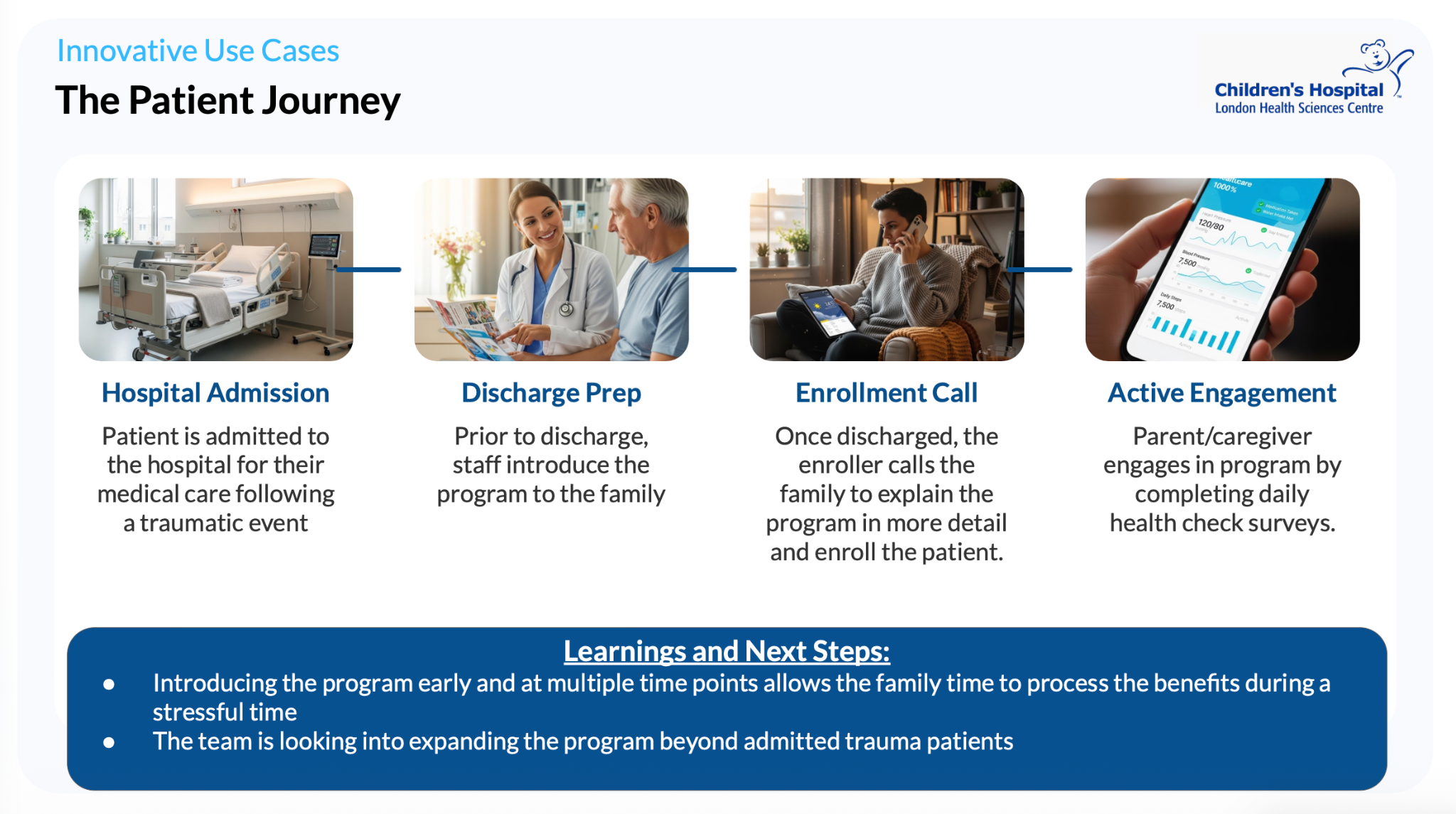
Because families are often not in a position to absorb new information at the moment of admission, the team learned quickly that SeamlessMD needed to be introduced early and revisited multiple times before discharge. Staff (nurses and physicians alike) introduce the program during the admission, giving families time to process the idea before a dedicated enrollment call follows after discharge, when caregivers are back home and better able to engage.
The Implementation: A Whole-Hospital Effort
Building this program was not a small undertaking. Because of the breadth of injury types covered, the LHSC team engaged a wide range of clinical specialists (neurosurgeons, general surgeons, ED physicians, plastic surgery, social work, and nursing) each contributing to the educational content within their area of expertise.
Critically, LHSC also engaged patients and families directly throughout the build. The team worked with their Child and Youth Advisory Council, Patient and Family Advisory Council, and volunteer patient partners - including families of children with chronic health conditions - to ensure the content reflected what families actually needed to know, not just what clinicians assumed they did.
"We will never put out a product or ask patients to use something without asking patients what we should put into it," Nerissa said.
Early Results
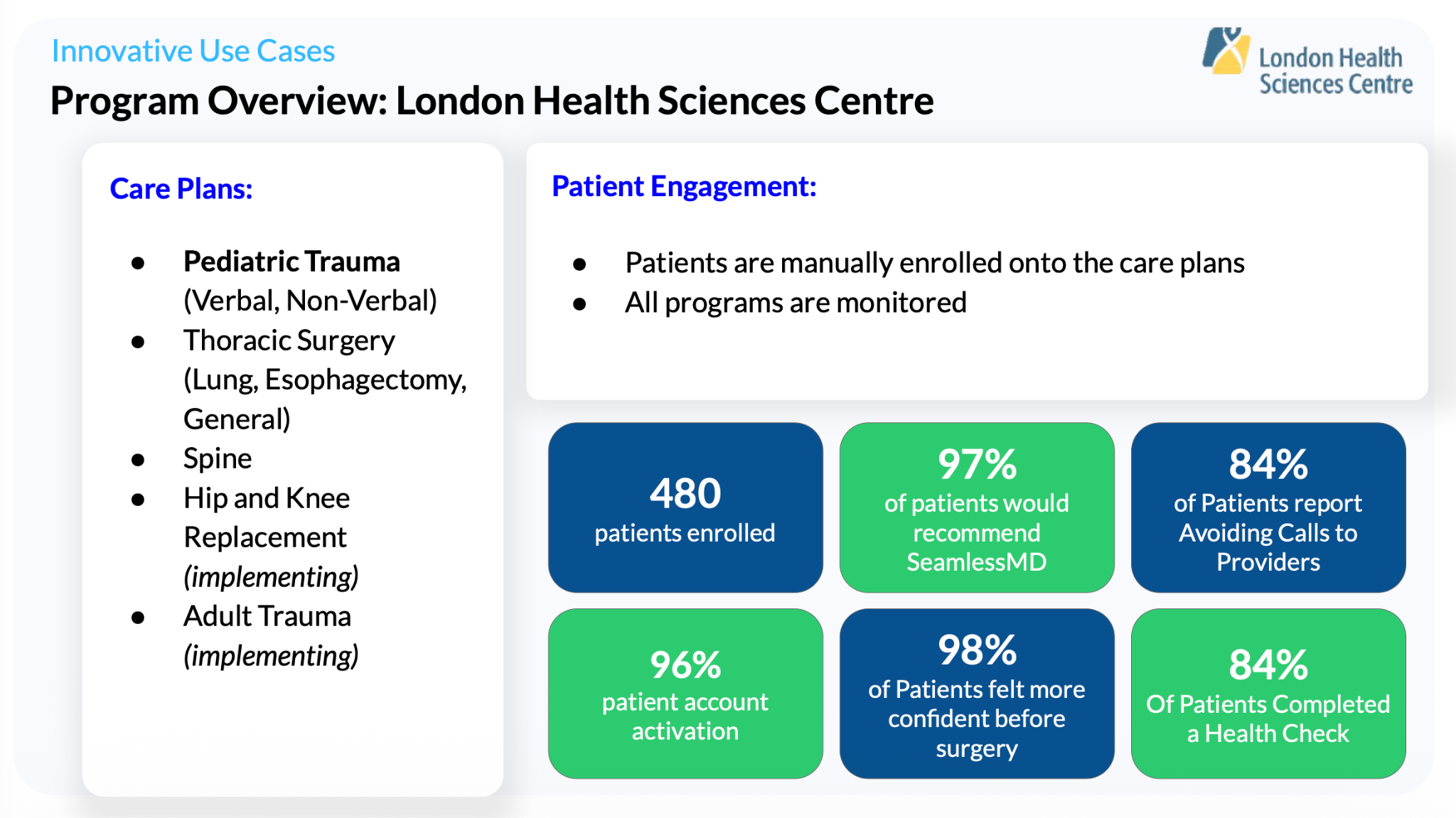
The program is still in its early stages and LHSC was just entering their busy trauma season at the time of the conference. That said, engagement metrics from across LHSC's broader SeamlessMD programs speak to the strong foundation they've built:
- 480 patients enrolled across all pathways
- 96% patient account activation rate
- 97% of patients would recommend SeamlessMD
- 98% of patients felt more confident before surgery or discharge
- 84% report avoiding at least one call to their provider
- 84% completed a health check
A Look Ahead
Even before the first full trauma season wraps, the LHSC team is already thinking about what comes next. There's strong interest in expanding the program beyond admitted patients - reaching families whose children visit the ED but don't require admission, and potentially offering pre-emptive trauma education to reduce injury recurrence. The vision is a digital safety net that catches patients not just at discharge, but at every point where they might otherwise fall through the cracks.
What LHSC has built is a model for how digital health tools can serve populations that have traditionally been among the hardest to reach: families in crisis, far from home, with no clear path back to care. We're proud to be part of that mission and we can't wait to see where they take it next.


.png)
